Households and buyers comparing what an appliance, air conditioner, heater or EV will cost to run in their own market.
02 / 03
Selected work
Selected work
Data & decision product
PowerCost Lab
Turn electricity use into a number people can reason about.
Overview
What the product is—and why it needed to exist.
A live global electricity running-cost calculator that makes tariffs, appliance behavior and assumptions visible instead of presenting a neat number as certainty.
Most answers reduce the problem to watts × hours. They hide duty cycles, charging losses, tariff differences and the distinction between an estimate and an observed measurement.
Give the user a useful answer immediately, but expose every consequential input and keep calculated estimates separate from contributed real-world evidence.
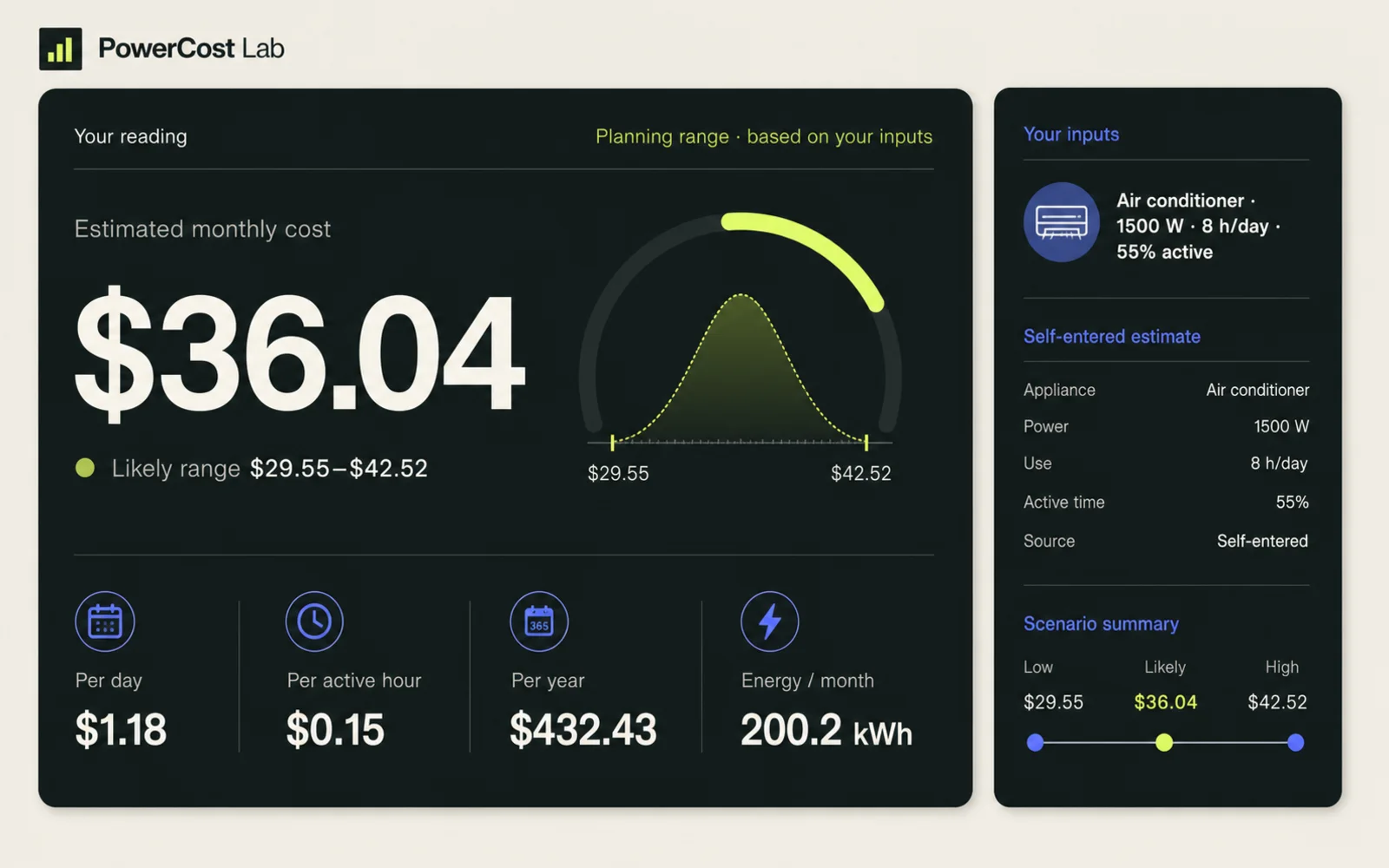
Product states
Multiple parts of the working system, rendered as one coherent product story.
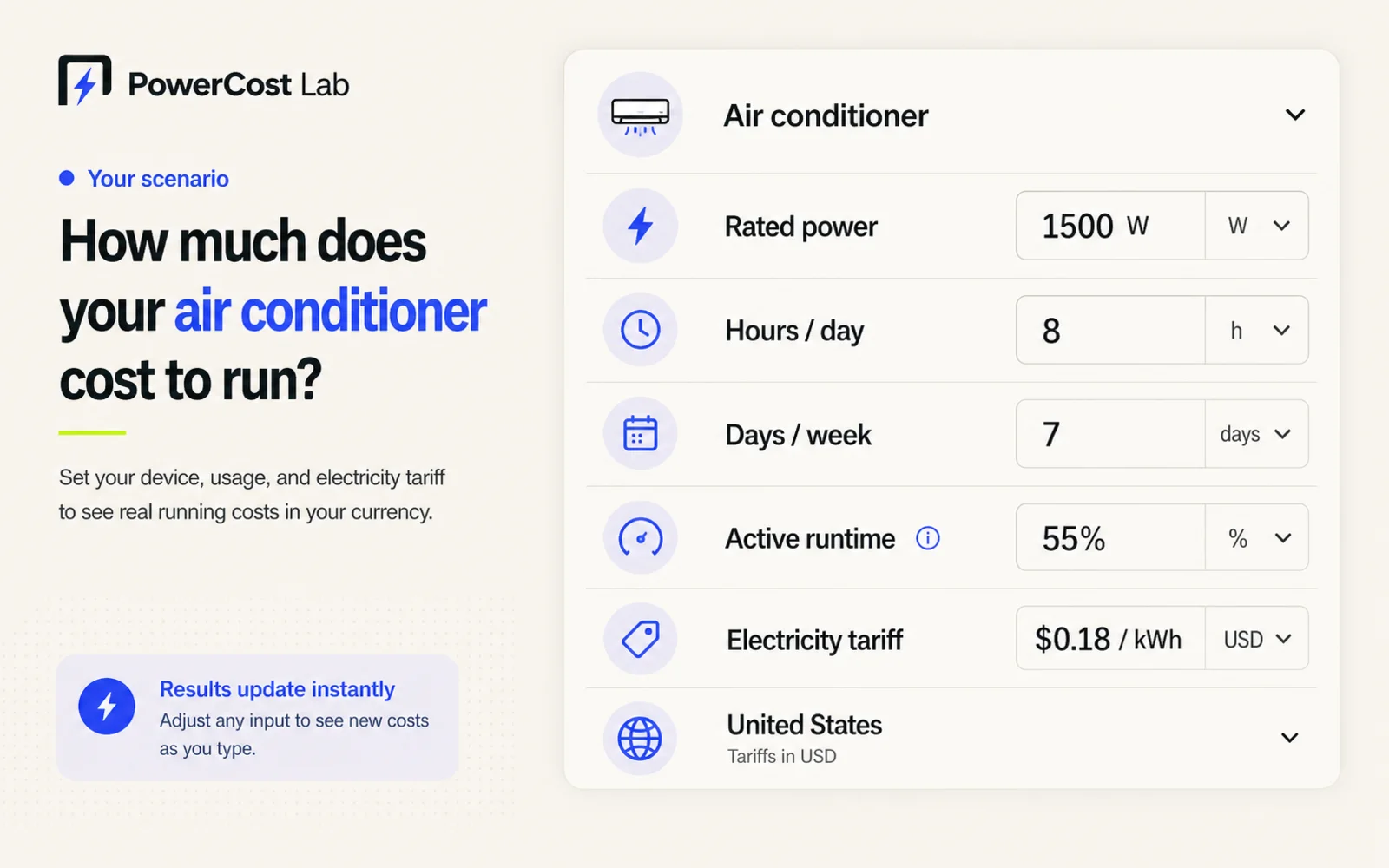
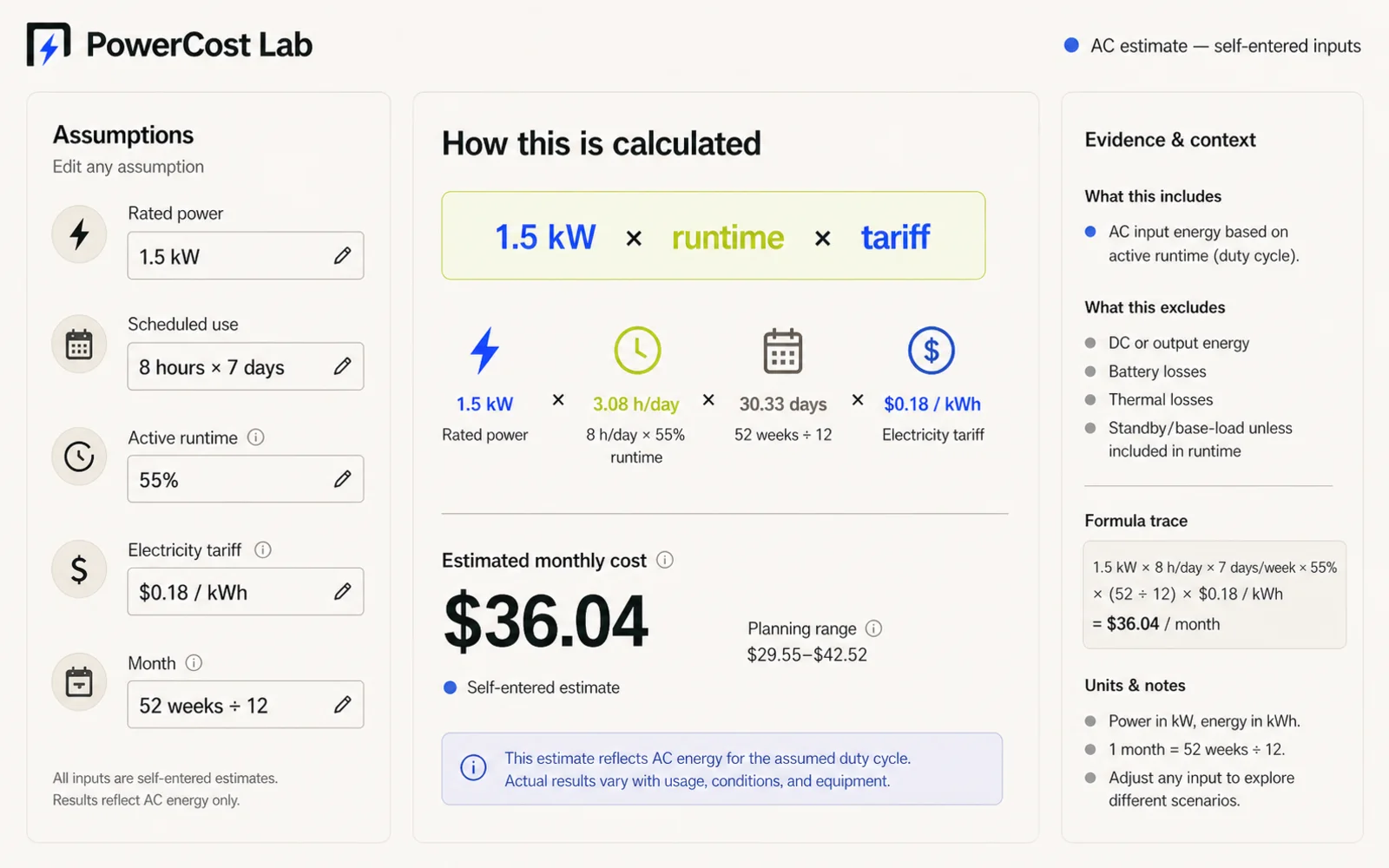
How do you make a technically imperfect estimate useful without presenting uncertainty as fact?
My role
Product ownership across the system.
The contribution is described at the level supported by product records: strategy, workflows, requirements, design decisions, orchestration, QA and release judgment.
- Product framing and calculation-model scope
- Information architecture and localized publishing contracts
- Evidence, consent and data-quality workflow design
- Product QA, launch decisions and iterative implementation
Product architecture
A simplified, truthful system view.
Only implemented or documented boundaries are shown. The diagram communicates product responsibility rather than claiming infrastructure scale.
React + TypeScript routesBrowser calculation engineLocalized product contractsCloudflare Worker APID1 evidence recordsR2 private evidence
Key decisions
The product is the decisions.
The interface follows from choices about trust, state, ownership, evidence and what the system should refuse to imply.
Keep estimates and observations distinct
Ordinary calculations stay in the browser. Measurements are a separate, opt-in evidence workflow with provenance and consent.
Make high-impact assumptions editable
Tariff, runtime, wattage and duty-cycle inputs remain visible because local context often changes the answer more than formula precision.
Localize from shared contracts
Thirty calculator pages use shared product rules so discoverability can grow without duplicating calculation logic.
Gate benchmarks by evidence quality
Thin cohorts should not be published as representative; provenance, quality scoring and minimum thresholds sit upstream of any benchmark.
Trade-offs
Useful means knowing where to stop.
Each product is designed around a boundary: automation can support the decision, but cannot manufacture certainty or erase human responsibility.
Simplicity vs. physical reality
A calculator must stay understandable while acknowledging cycling behavior, standby loads and charging losses where they materially affect the decision.
Immediate utility vs. data collection
The public tool works without an account or database write; evidence contribution is optional and separately explained.
Localization vs. maintainability
Shared contracts centralize formulas and guidance boundaries while market pages provide currency and tariff context.
Product flow
From input to a defensible next action.
The flow is intentionally legible. Users should understand what entered the system, what changed and where judgment remains theirs.
Choose calculatorSet local assumptionsCalculateInspect formula & caveatsCompare scenariosOptionally contribute evidence
What shipped
Working capability, not slideware.
Shipped means the capability is present in the repository and product record. Current-state language below keeps release status and adoption claims separate.
- 12 focused calculation models
- 30 localized calculator pages
- Reference guidance for 11 verified markets
- Editable tariffs, runtime and currency inputs
- Transparent formulas, ranges and estimate warnings
- Consent-led evidence contribution and deletion controls
What I learned
Transparency is not extra copy around a calculation. It is product behavior: editable assumptions, visible provenance and a clear boundary between modeled and measured truth.