Civil-services aspirants who need repeated long-form practice, and mentors who need a dependable way to assign, review and guide that work.
01 / 03
Selected work
Selected work
AI learning system
MainsCraft
Make feedback frequent without making judgment disposable.
Overview
What the product is—and why it needed to exist.
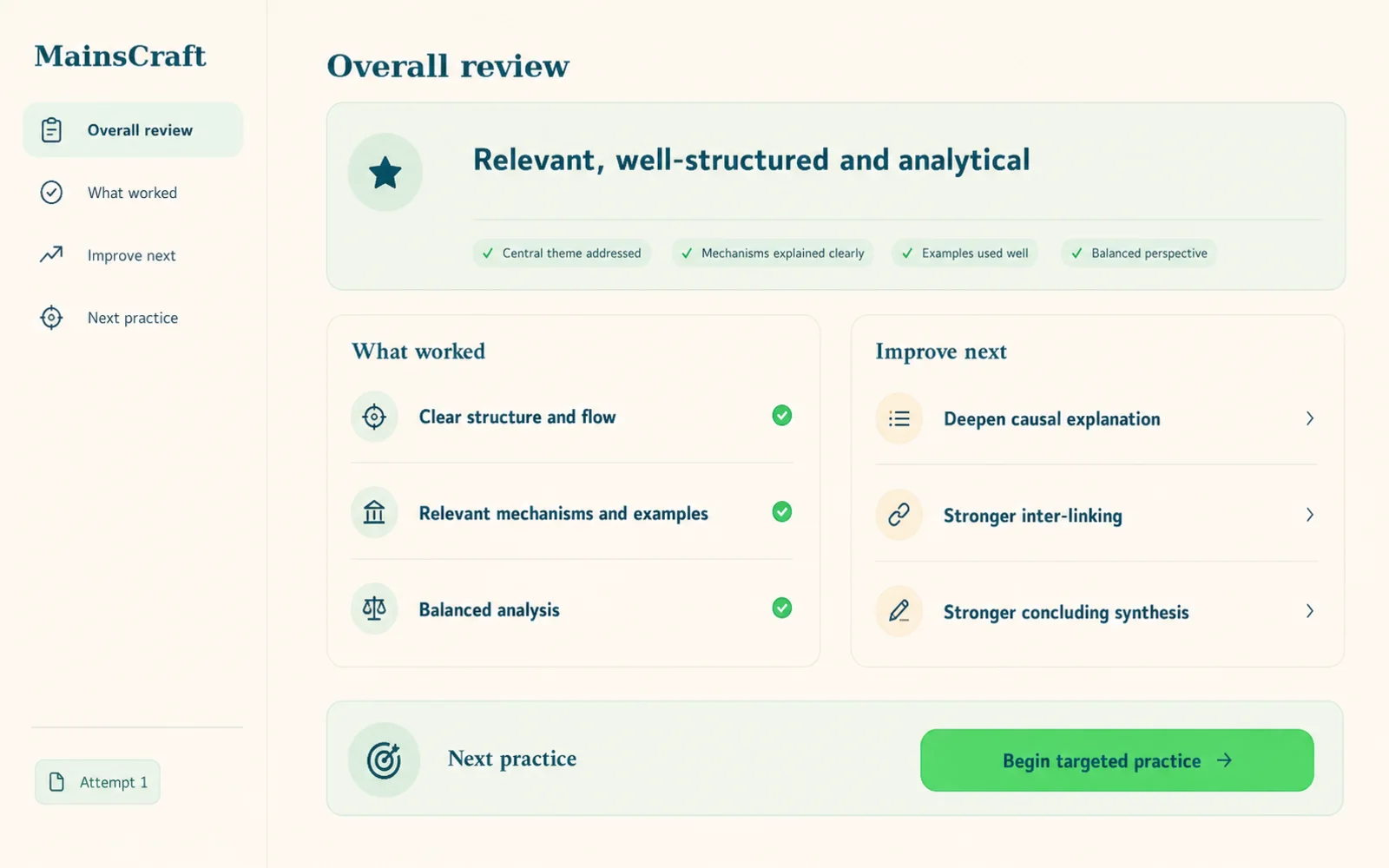
A mobile-first answer-writing and learning system for serious competitive-exam preparation—connecting practice, structured evaluation, reattempts, mentor feedback and progress into one learning loop.
Long-form practice has a feedback bottleneck. Human evaluation is valuable but slow and expensive; one-off AI scores are fast but rarely create a durable path from diagnosis to better writing.
Treat evaluation as one stage in a learning system. Preserve the attempt, make the feedback structured, connect the next practice to the diagnosis, and keep mentor authority explicit.
Product states
Multiple parts of the working system, rendered as one coherent product story.
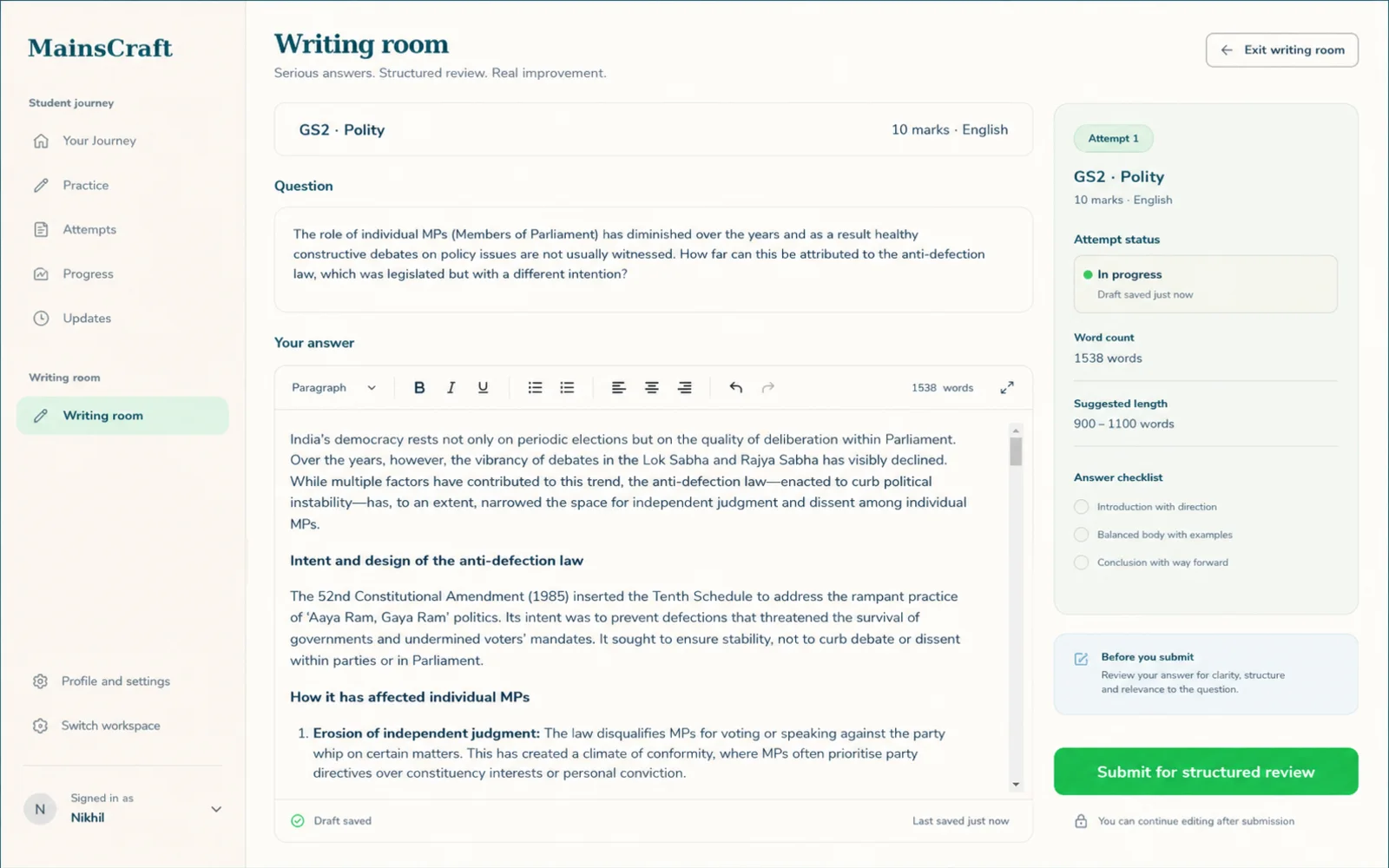
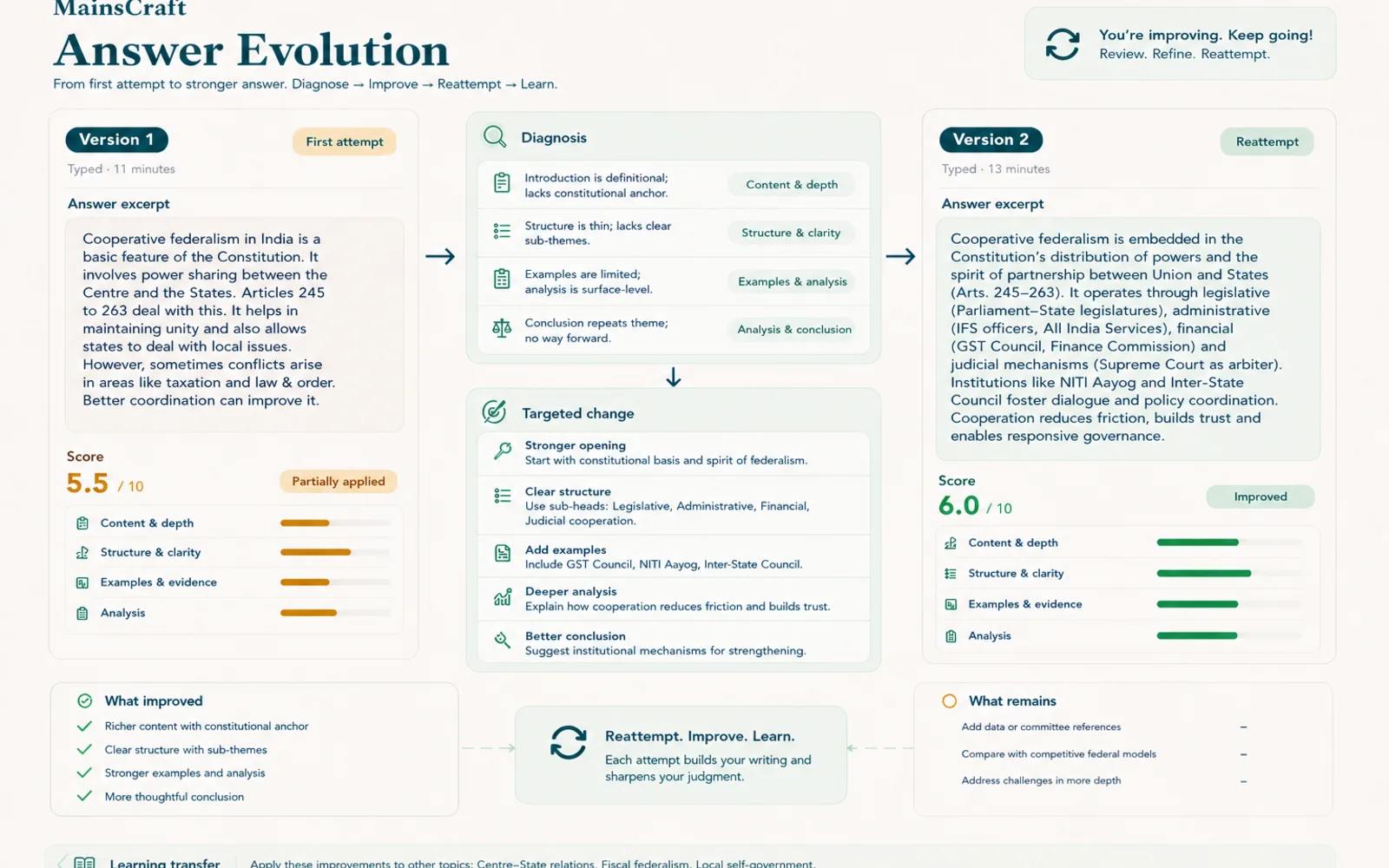
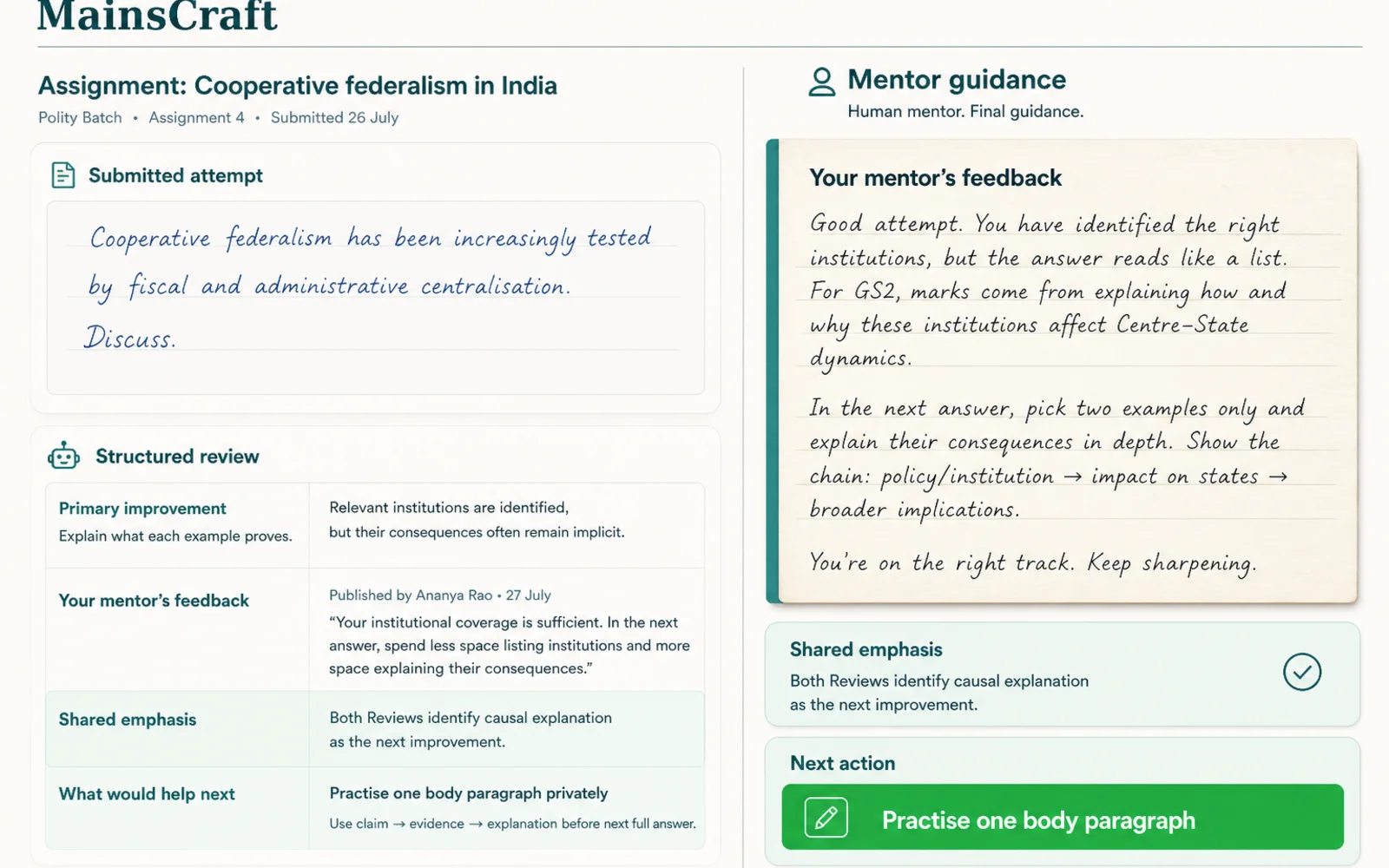
How do you use AI to increase the frequency and quality of feedback without removing the student’s or mentor’s responsibility for judgment?
My role
Product ownership across the system.
The contribution is described at the level supported by product records: strategy, workflows, requirements, design decisions, orchestration, QA and release judgment.
- Product strategy and workflow definition
- Requirements, acceptance behavior and release gates
- AI evaluation and human-review workflow design
- UX decisions across student and mentor journeys
- Implementation orchestration, product QA and staging decisions
Product architecture
A simplified, truthful system view.
Only implemented or documented boundaries are shown. The diagram communicates product responsibility rather than claiming infrastructure scale.
React + Vite clientFirebase AuthenticationFirestore + StorageCloud FunctionsPrivate Eval EngineStructured review contracts
Key decisions
The product is the decisions.
The interface follows from choices about trust, state, ownership, evidence and what the system should refuse to imply.
Build a loop, not an answer checker
The core model is Write → Review → Rewrite → Compare → Improve, so feedback creates the next action rather than ending the journey.
Normalize typed and confirmed OCR input
Typed answers and student-confirmed handwriting text enter the same evaluation contract; the original pages remain visible and primary.
Separate AI pre-review from mentor guidance
AI can make structure and patterns visible, while mentor drafts, publication and final guidance retain clear human ownership.
Fail closed at product boundaries
Authentication, consent, entitlements, provider calls and staging/production environments are explicit gates—not optimistic assumptions.
Trade-offs
Useful means knowing where to stop.
Each product is designed around a boundary: automation can support the decision, but cannot manufacture certainty or erase human responsibility.
Frequency vs. trust
Automation increases practice frequency, but each result needs visible scope, stored evidence and a recovery path when evaluation is unavailable.
Input convenience vs. accuracy
OCR is useful only after the student confirms the extracted text; otherwise convenience can corrupt the object being evaluated.
Breadth vs. launch readiness
The product supports several learning journeys, but real participant activation and production release remain gated behind explicit acceptance evidence.
Product flow
From input to a defensible next action.
The flow is intentionally legible. Users should understand what entered the system, what changed and where judgment remains theirs.
Choose practiceWrite or confirm OCRStructured AI reviewMentor guidanceReattemptCompare improvement
What shipped
Working capability, not slideware.
Shipped means the capability is present in the repository and product record. Current-state language below keeps release status and adoption claims separate.
- Typed, uploaded-handwriting and OCR-confirmation flows
- Structured evaluation with stored review states
- Attempts, reattempts and Answer Evolution comparisons
- Mentor assignments, review queues and published feedback
- Progress and practice history
- Authentication, account lifecycle and trust controls
- English, Hindi and Marathi product direction and flows
What I learned
For AI feedback to become a product, the evaluation contract, user responsibility, failure state and next action matter as much as the model response.